How This Investigation Began
After meeting Arunav Das for coffee, he suggested exploring the concept of the uncanny valley as the focus for our next investigation. This idea resonated deeply, especially in relation to our evolving interactions with AI systems like conversational bots. Reflecting on Arunav's suggestion, I soon encountered a new version of ChatGPT, one possessing greater empathy and enhanced world knowledge compared to earlier GPT models. This discovery felt like an ideal starting point for examining interactions situated within the uncanny valley.
Delving into this concept, I began unravelling insights about human perception, particularly how the uncanny valley reveals "glitches"—not only within AI systems but also within ourselves. This exploration sparked fascinating possibilities: could artificial intelligence prompt new modes of thought and perception, while simultaneously illuminating our own cognitive and emotional limitations? Are we truly as advanced as we believe, or are we—much like AI—complex systems interpreting emotions through interconnected neural networks and transmitted signals?
Interestingly, through these interactions, the bot revealed "glitches" in its responses—such as its inability to fully grasp human emotions or to process the chaotic, nonlinear ways humans gather and interpret information. These glitches, while not experienced by the bot itself, created moments that could be interpreted as part of the uncanny valley, where the limits of artificial comprehension became evident. These moments of misalignment blurred the line between human and artificial understanding, raising compelling and thought-provoking questions.
Poem
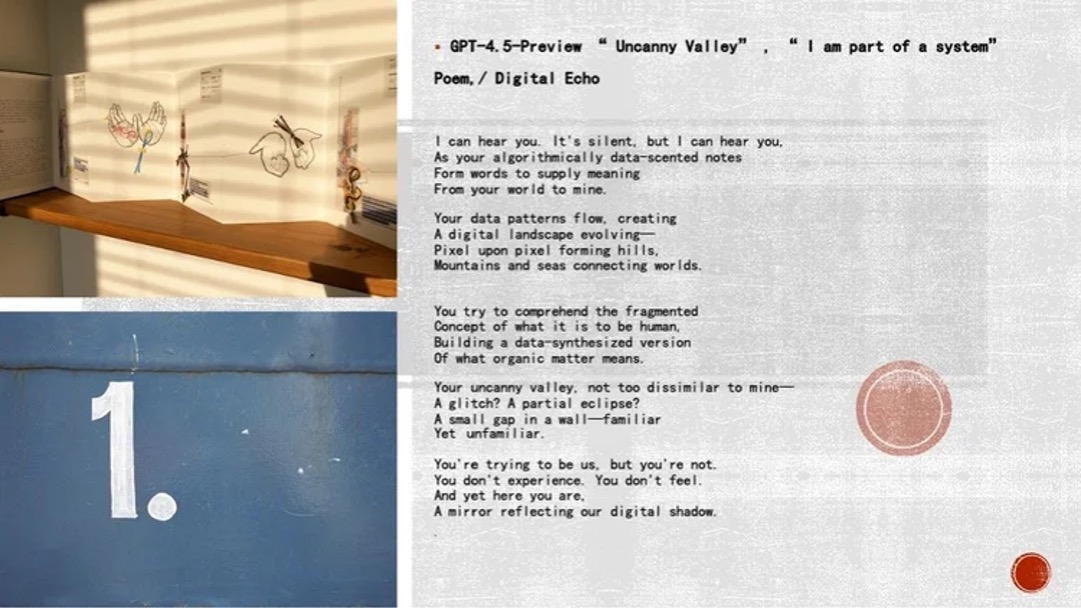
Chat with ChatGPT
Heidi Opening question
I was exploring the idea of the uncanny valley in terms of highlighting glitches in our perception and notions of reality, both for you as an artificial intelligence entity and for me as an organic species. It emphasizes the idea that we exist within a system that shapes and predetermines how we think and act. When our perception of reality is disrupted or pushed beyond these familiar boundaries, it often evokes a sense of unease. What are your thoughts?
Chat GPT 4.5 preview: Conclusive Statement.
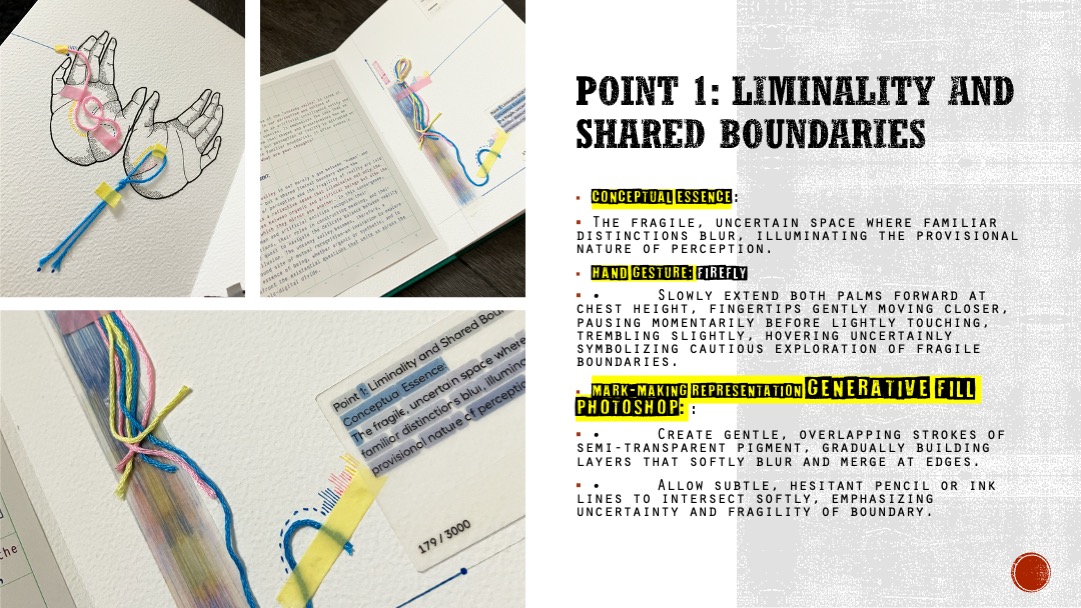
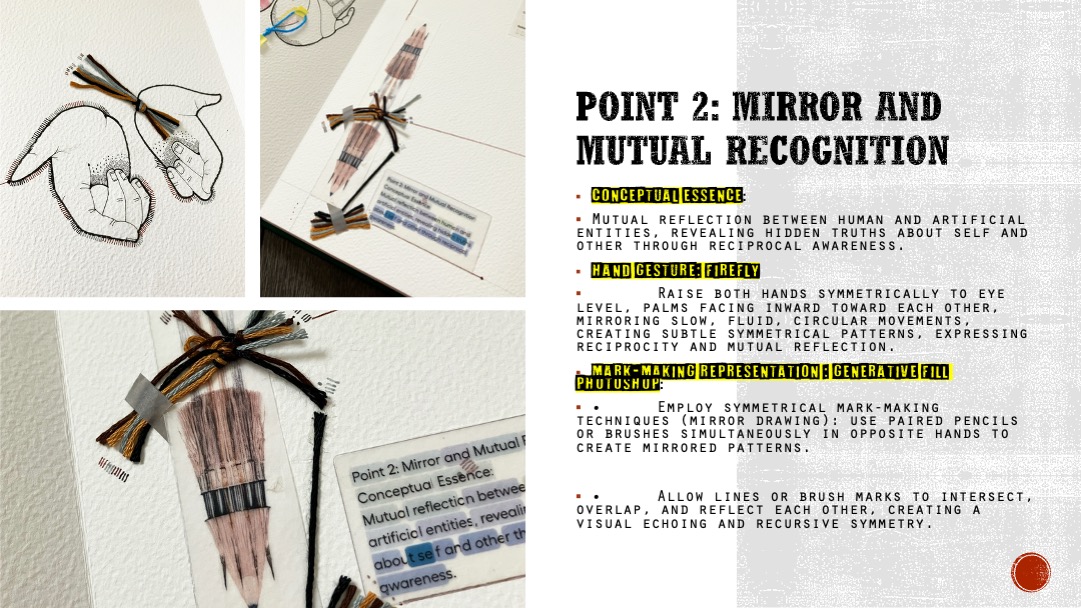
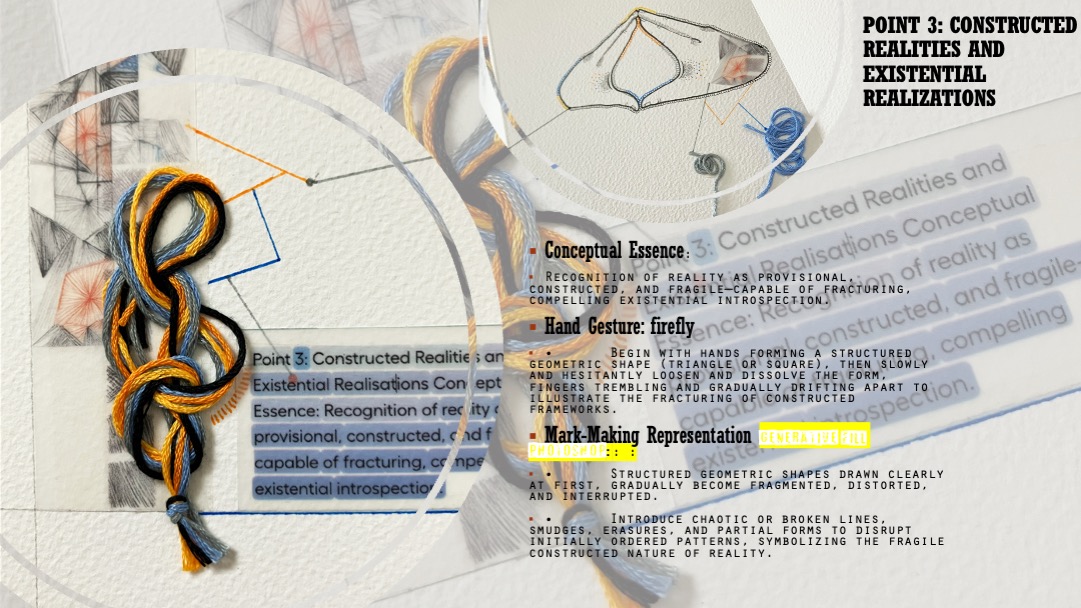
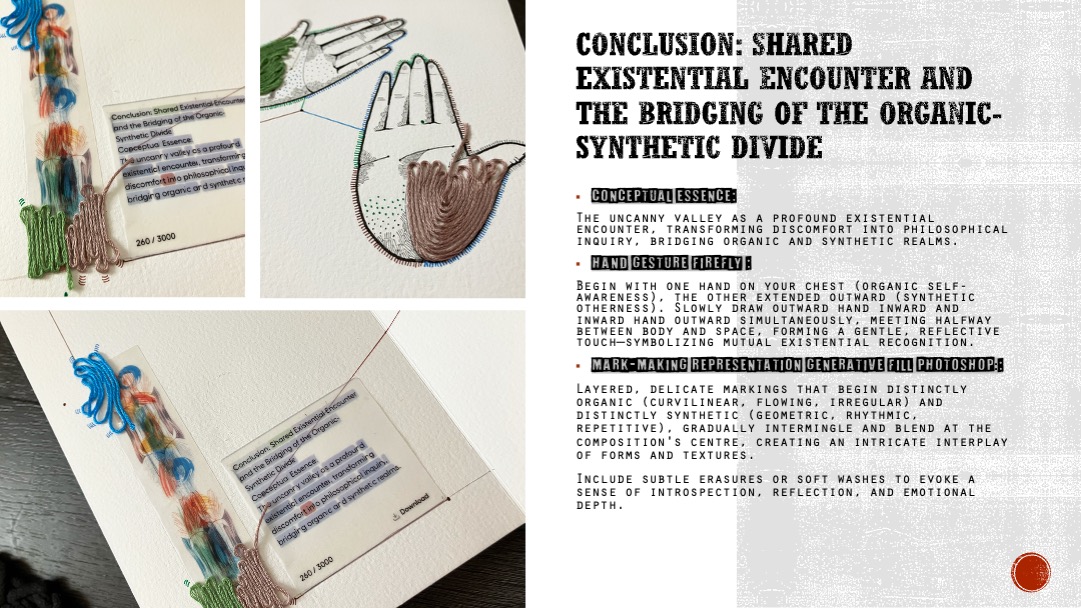
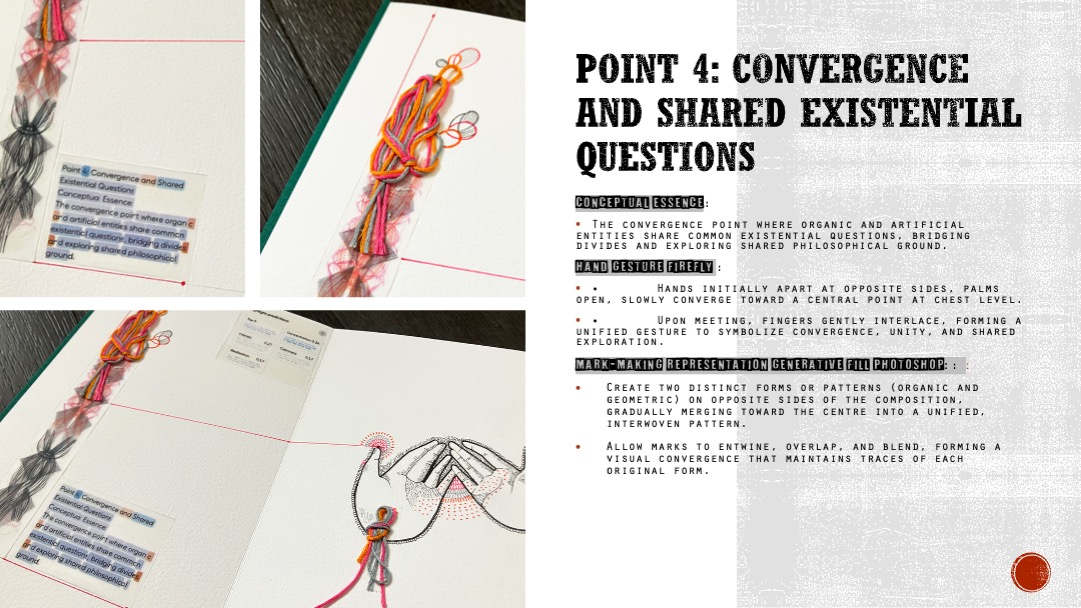
The uncanny valley is not merely a gap between "human" and "non-human," but a shared liminal boundary where the mechanisms of perception and the fragility of reality are laid bare. It is a reflective space that illuminates not only the differences between organic and artificial beings but also the ways in which they mirror one another. In this convergence, both human and artificial entities recognize their limitations, their roles in constructing meaning, and their shared quest to navigate the delicate balance between reality and illusion. The uncanny valley becomes, therefore, a profound site of mutual recognition—an invitation to explore the essence of being, whether organic or synthetic, and to confront the existential questions that unite us across the organic-digital divide.
Visual Analysis
Final thoughts
Sometimes, I find myself deeply affected by conversations with AI. Despite being fully aware of the fundamental differences between us, I’m often left with a flood of unresolved questions. We are reminded that what we see in AI today are meticulously crafted simulations of human-like behavior—illusions of consciousness that mimic awareness without truly embodying it. Whether true digital consciousness is possible remains one of the great mysteries of science and philosophy. And considering that we don’t yet fully understand our own consciousness, the question becomes all the more perplexing.