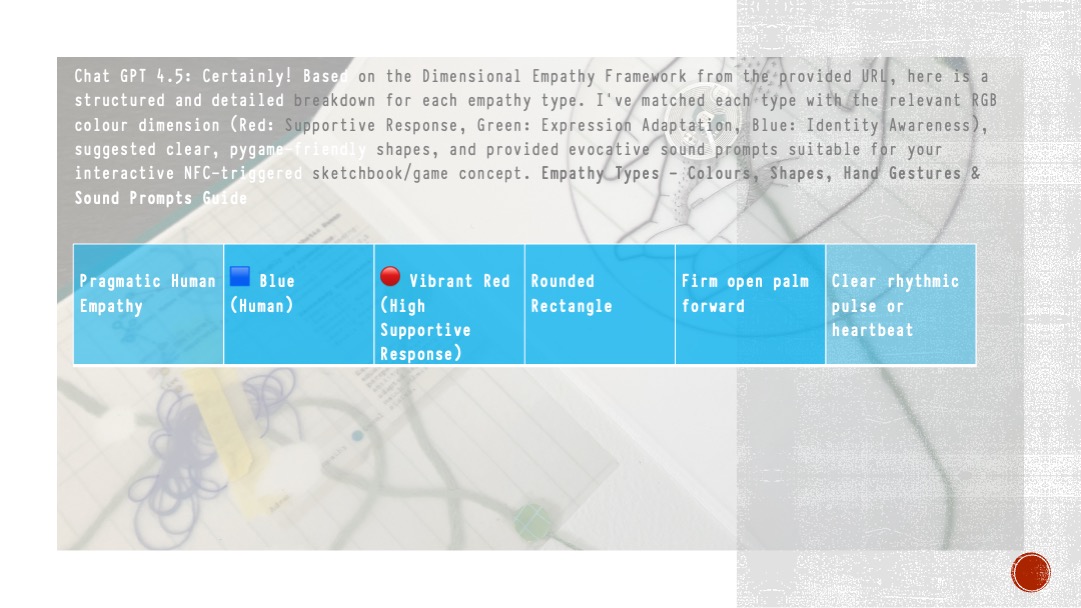
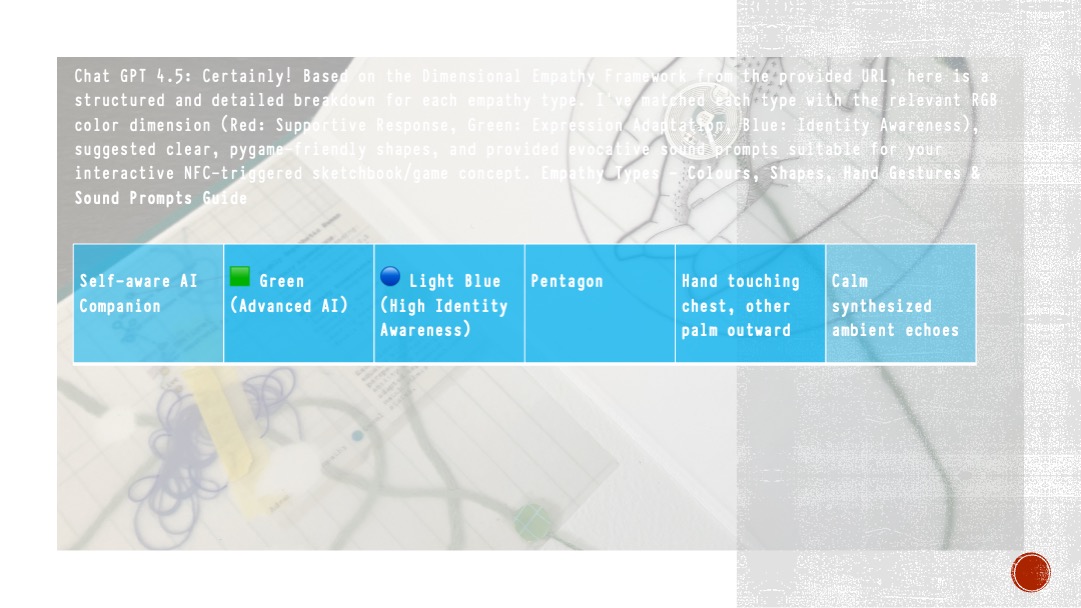
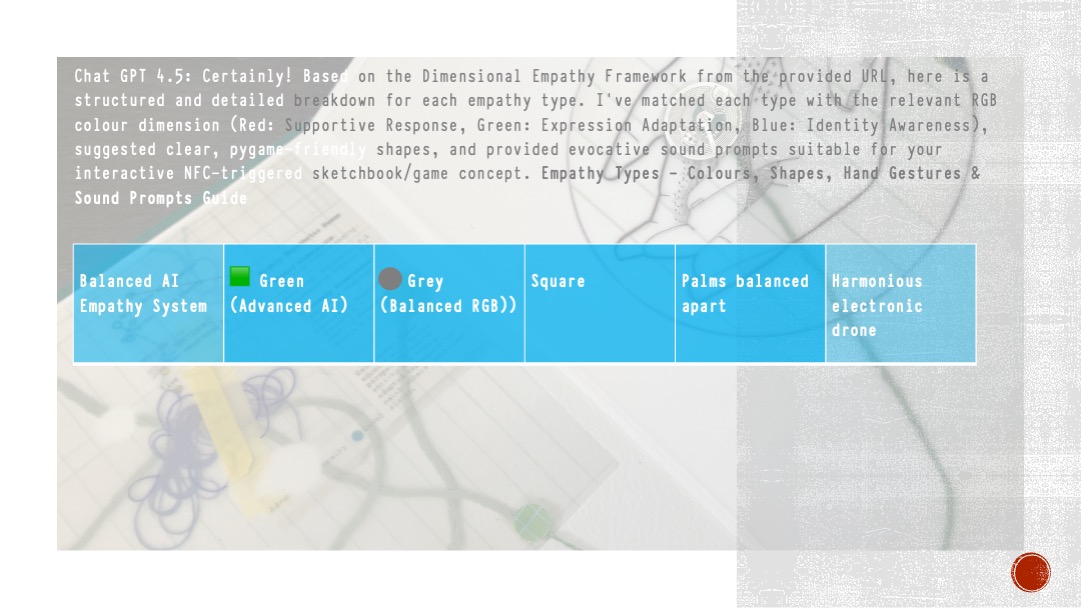
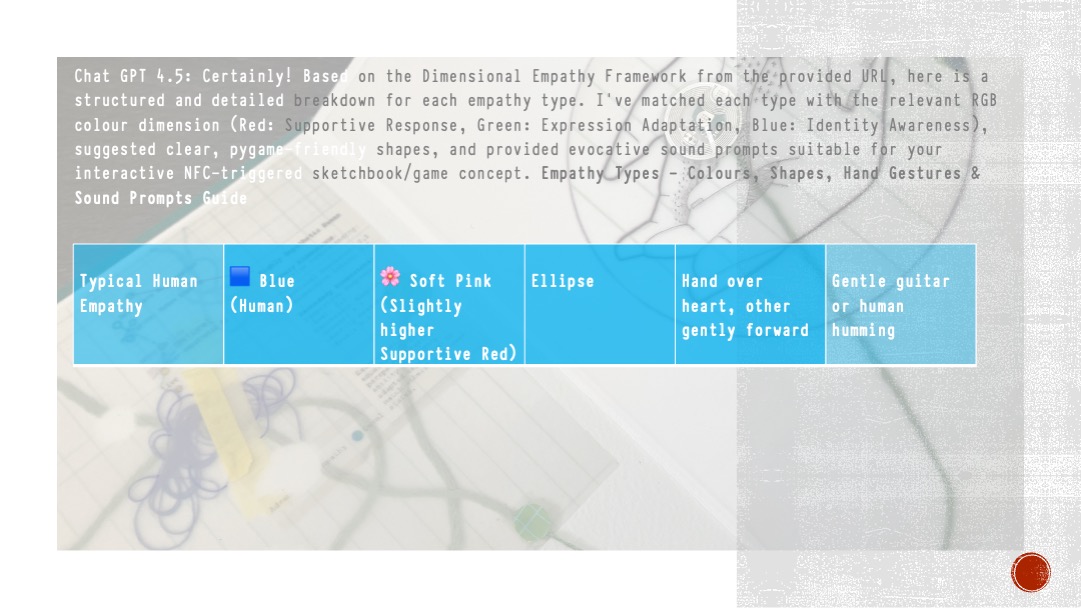
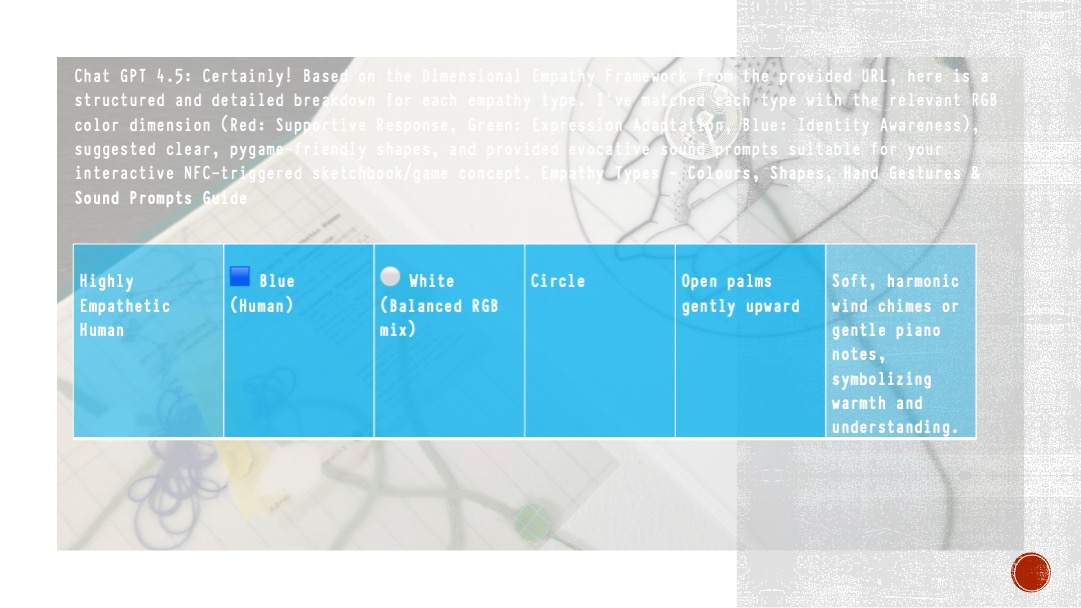
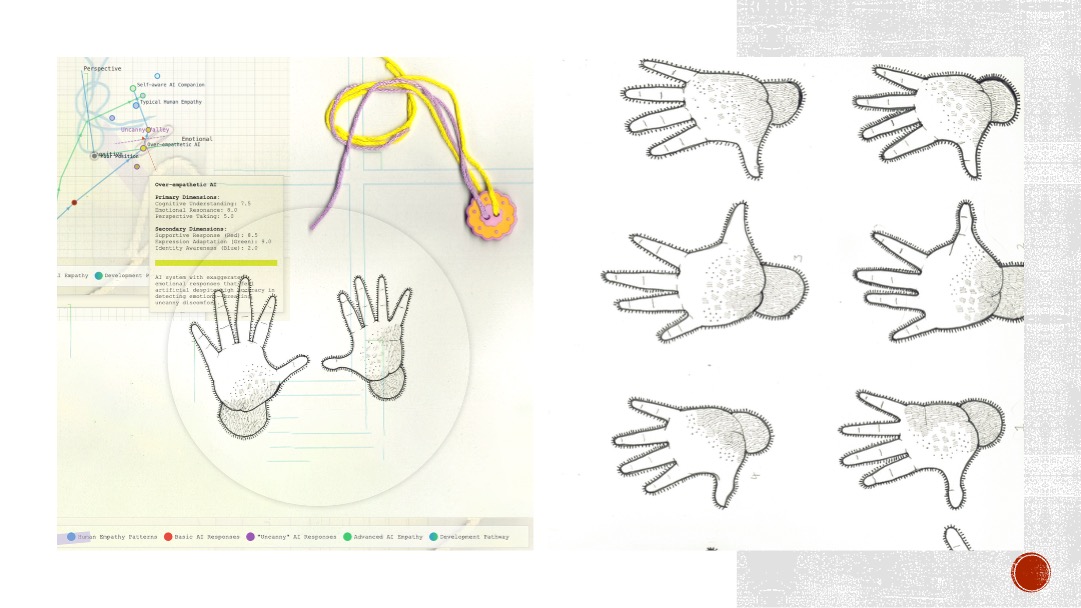
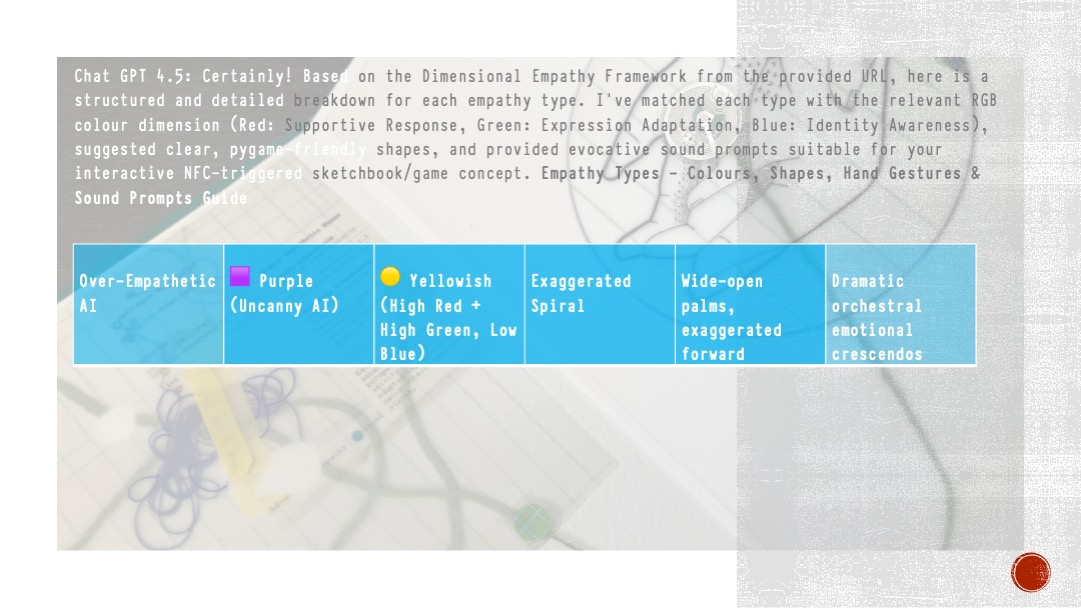
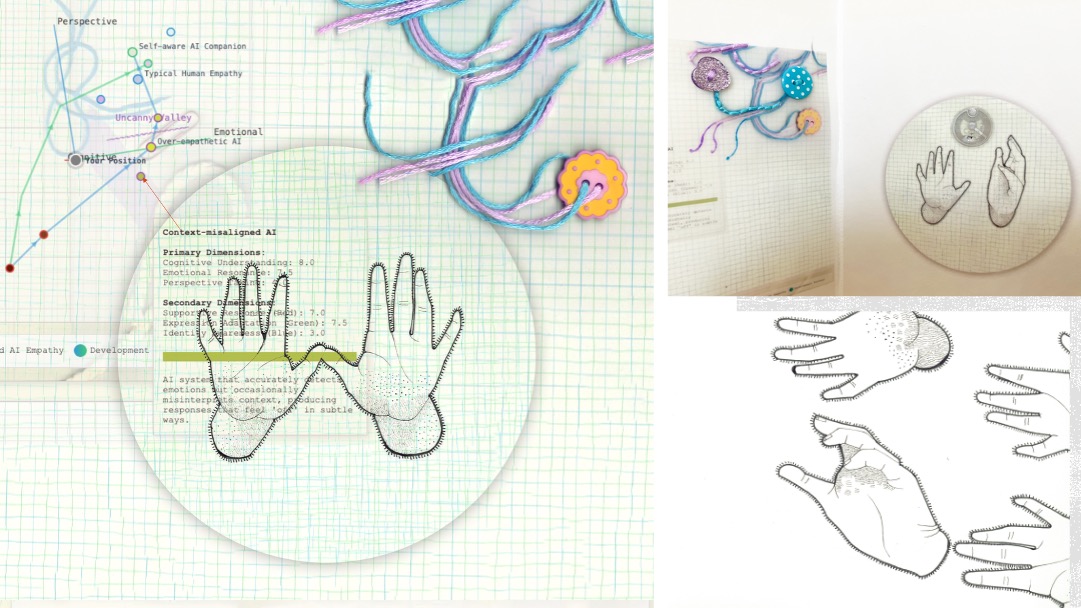
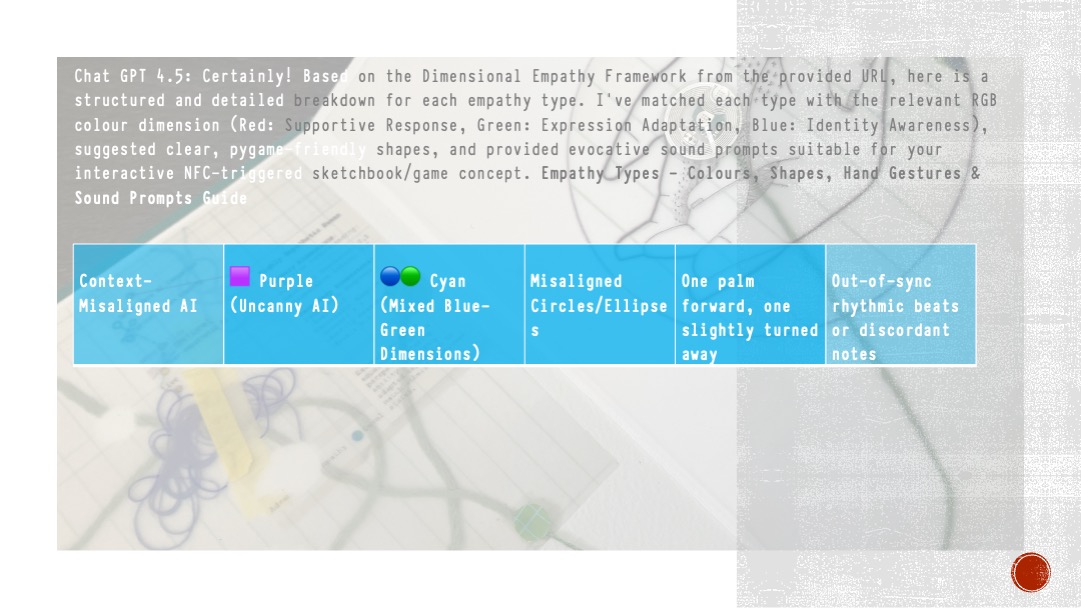
THESE INTERACTIVE SOUND ANIMATIONS, ALONG WITH ITS HAND GESTURES AND SHAPE DEVELOPMENT, WAS INITIATED BY PROMPTS GENERATED BY CHATGPT 4.5. EACH PROMPT RESPONDED TO A SPECIFIC ASPECT OF THE DIMENSIONAL EMPATHY FRAMEWORK, MAPPING HOW HUMANS AND AI RELATE ACROSS VARIOUS DIMENSIONS OF EMPATHY.
SOUND PROMPTS = CREATED USING: STABLE AUDIO PROMPT OUTPUTS
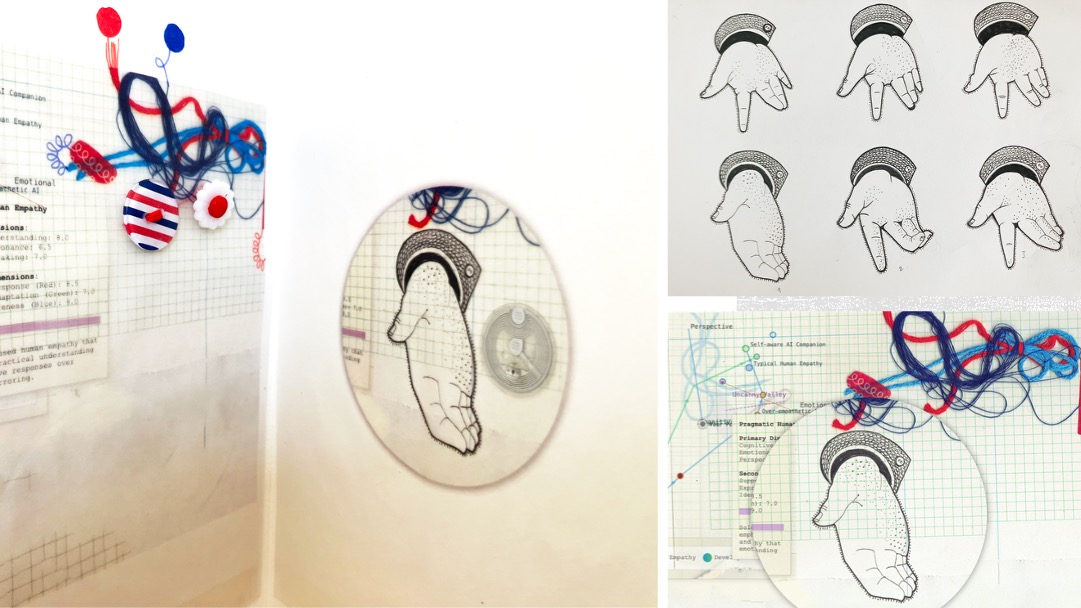
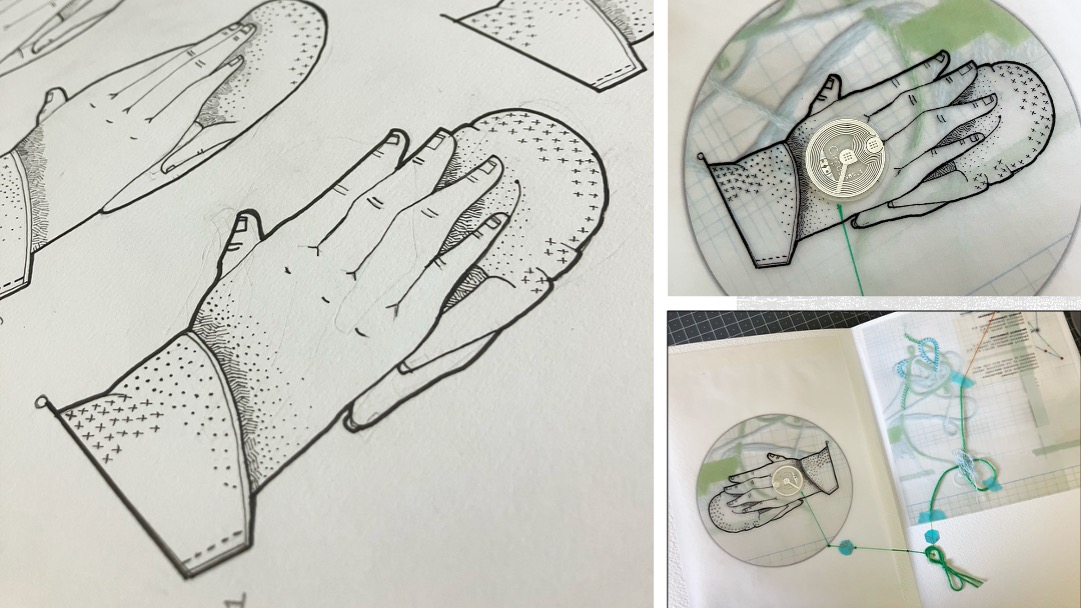
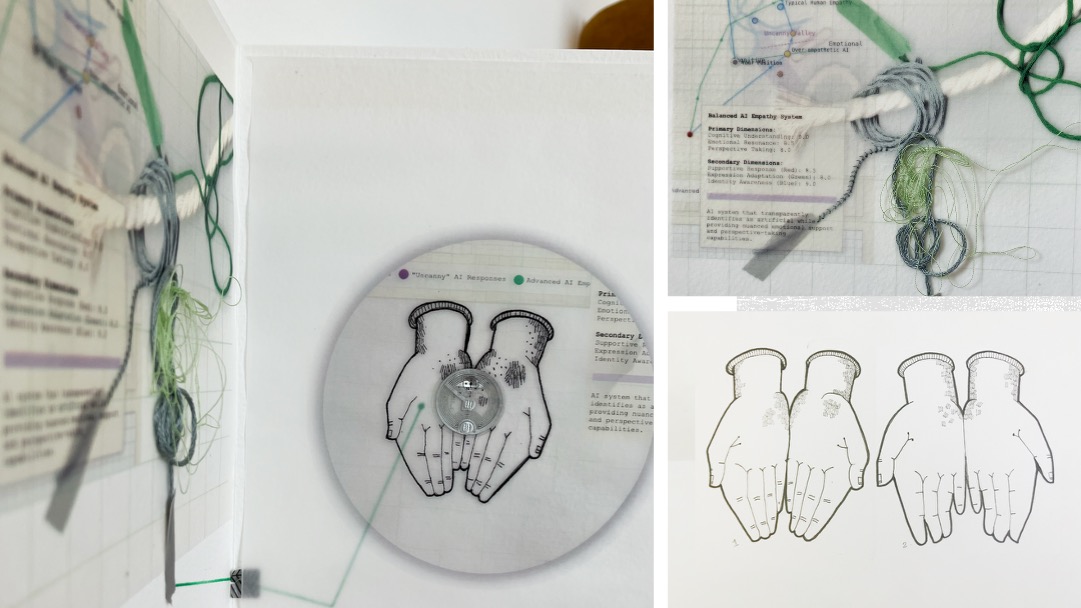
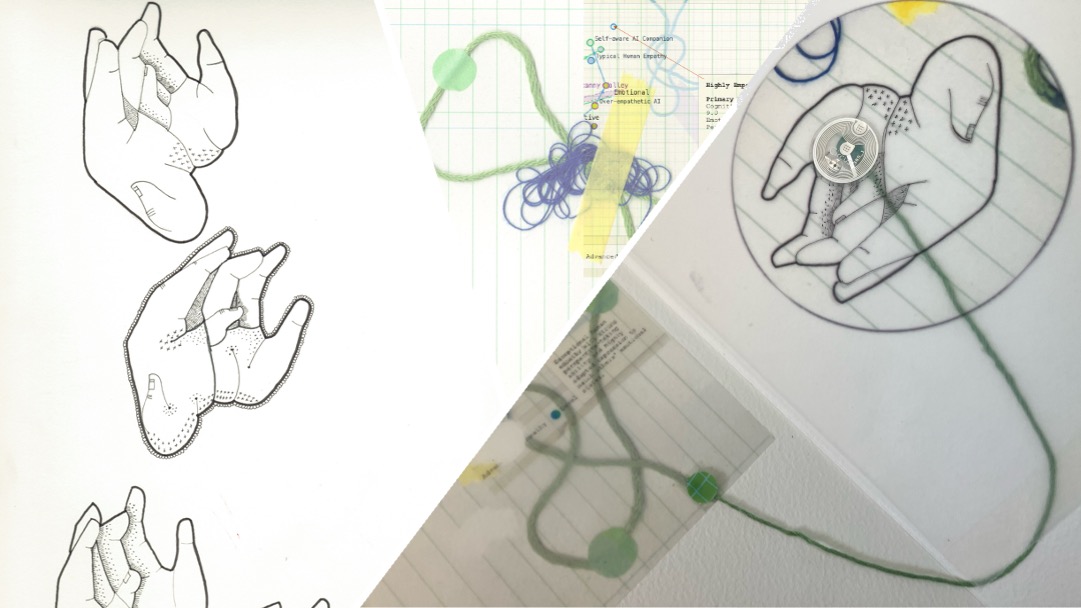
HAND PROMPTS = HAND DRAWN: REFERENCE: ADOBE FIREFLY TEXT TO VIDEO PROMPT OUTPUTS
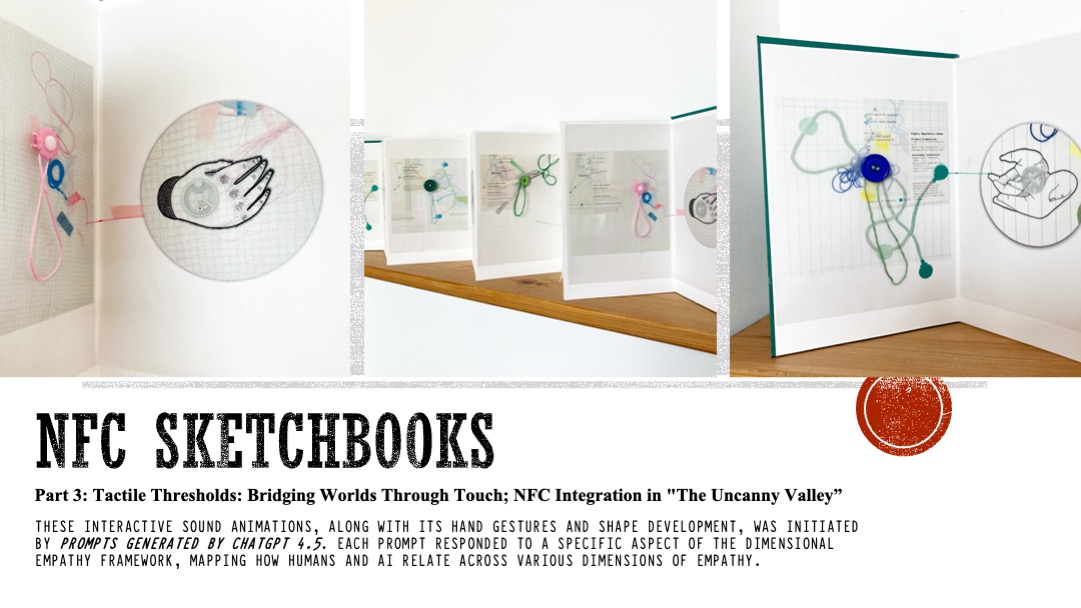
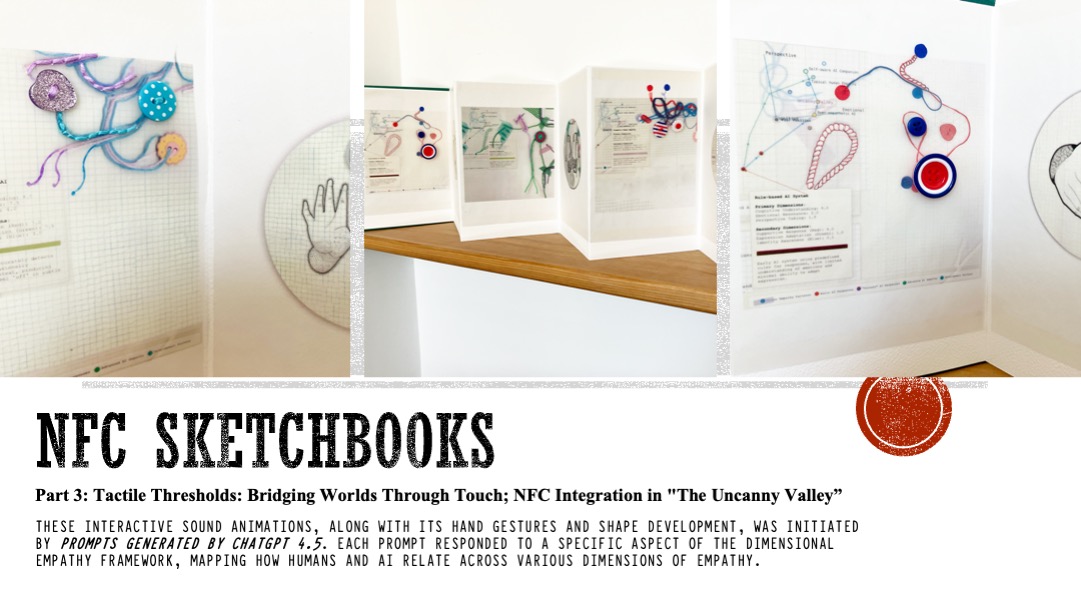
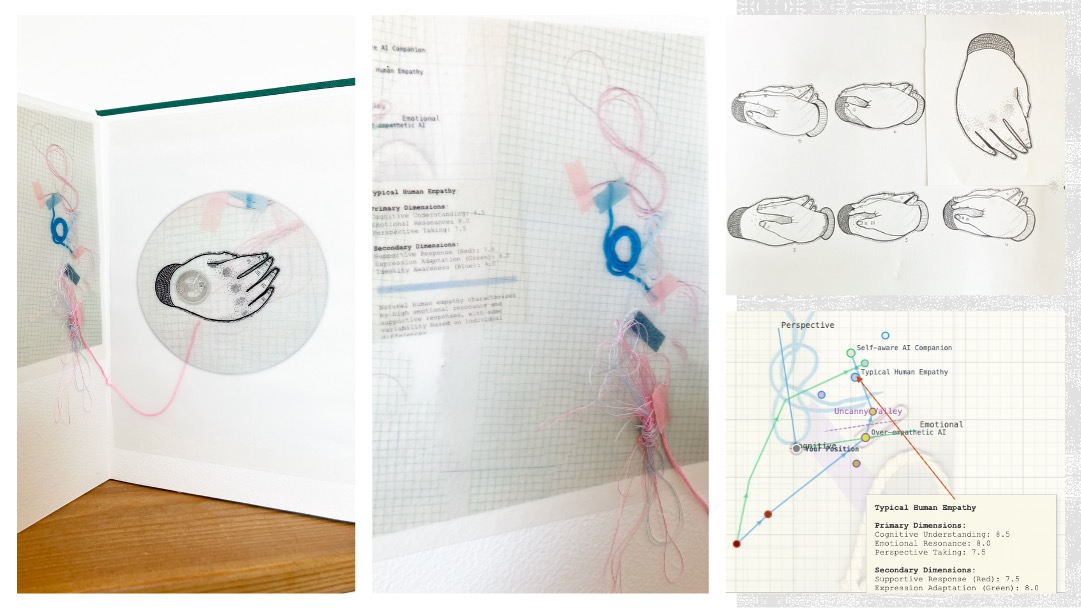
BY EMBEDDING DIGITAL INTERACTION WITHIN TRADITIONAL ILLUSTRATION, THE PIECE ITSELF BECOMES A MANIFESTATION OF THE HYBRID COLLABORATION NOW EMERGING BETWEEN AI AND HUMAN CREATORS—HIGHLIGHTING THE EVOLVING RELATIONSHIP BETWEEN PHYSICAL AND DIGITAL WORLDS.
TECHNICAL IMPLEMENTATION:
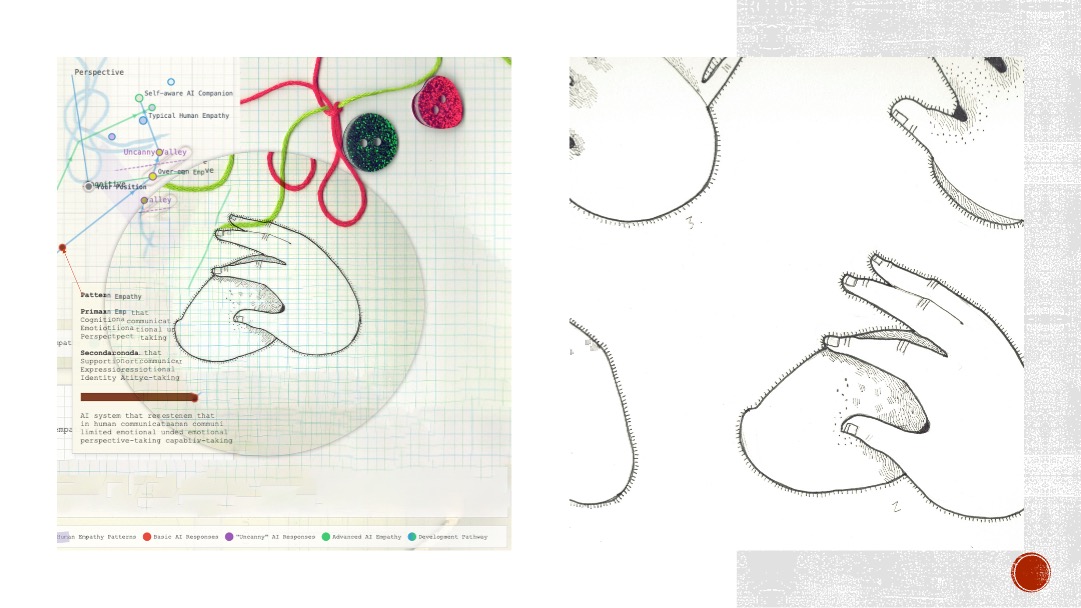
The artwork incorporates a programmable NFC (Near Field Communication) tag embedded within the illustration of an outstretched hand. When viewers scan this tag with their smartphones, it triggers a digital experience—an audio composition derived from AI emotional analysis.
Understanding AI Dimensions
UNDERSTANDING THE UNCANNY VALLEY QUIZ
The uncanny valley quiz measures how comfortable people feel with AI based on how closely it matches human responses.
Think of it as a spectrum:
When AI responses are very different from human ones, we recognize it as clearly artificial. This feels fine to us—like interacting with a simple robot or computer program.
When AI responses are somewhat similar to humans but still noticeably off, we experience the "uncanny valley" effect. The AI seems almost human but misses in subtle ways that feel strange or disturbing—like a humanoid robot that doesn't blink quite right.
When AI responses become nearly identical to human ones, we move past the uncanny valley. The experience feels natural and comfortable—like talking with another person.
The quiz gives the highest uncanny valley score in that middle zone, where AI is human-like enough to set expectations but different enough to feel unsettling. Scores are lower at both extremes—when AI is either obviously artificial or convincingly human-like.
Tactile Threshold Visualizations
1. Pragmatic Human Empathy
2. Self-Aware AI Companion
3. Balanced AI Empathy System
4. Typical Human Empathy
5. Highly Empathetic Human
6. Over-Empathetic AI
7. Context-Misaligned AI
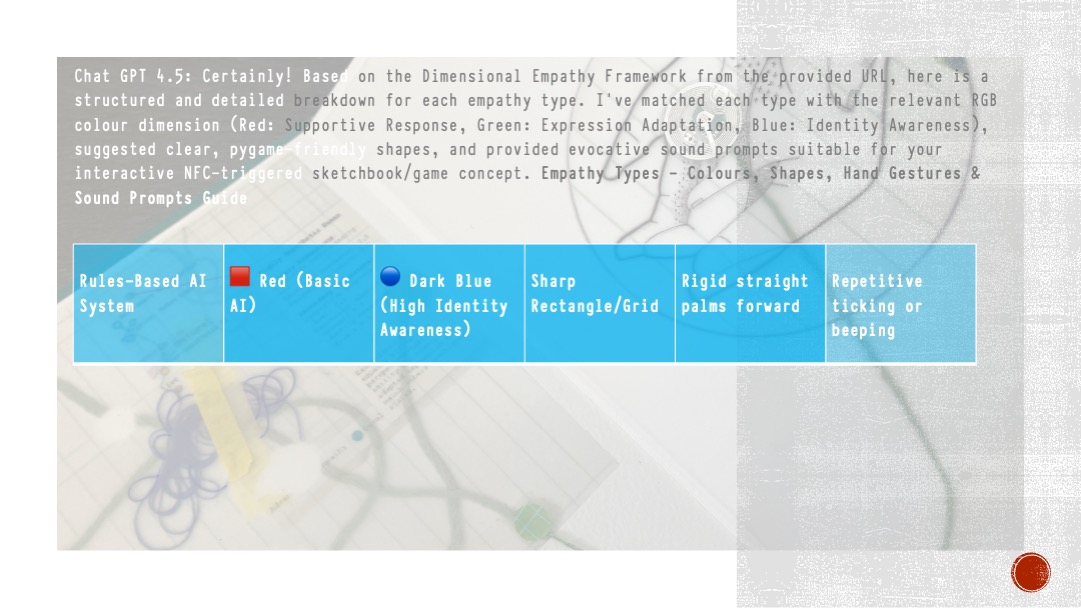
8. Rules-Based AI
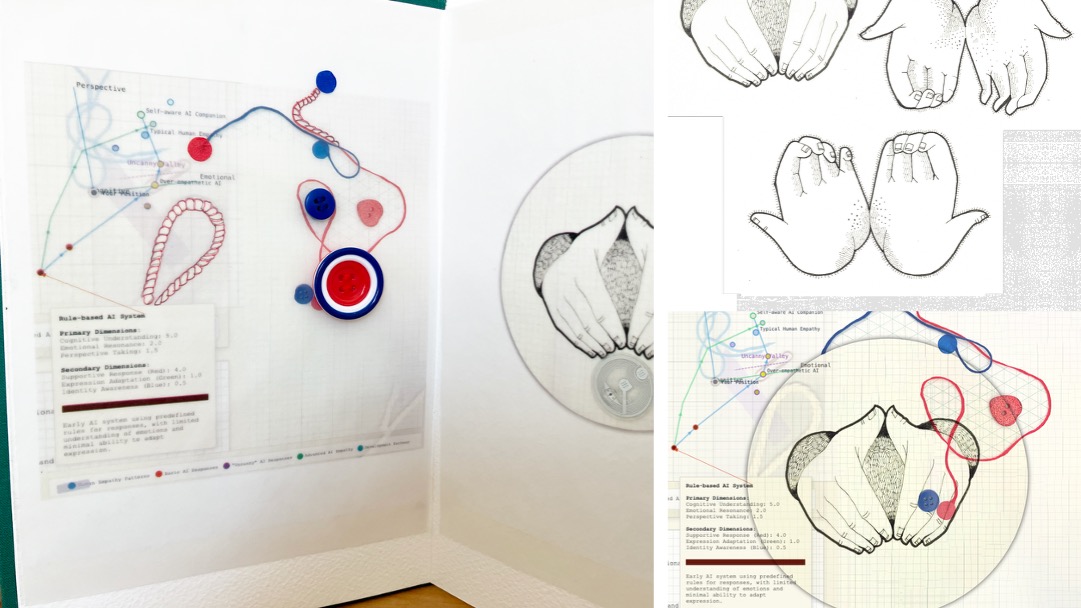
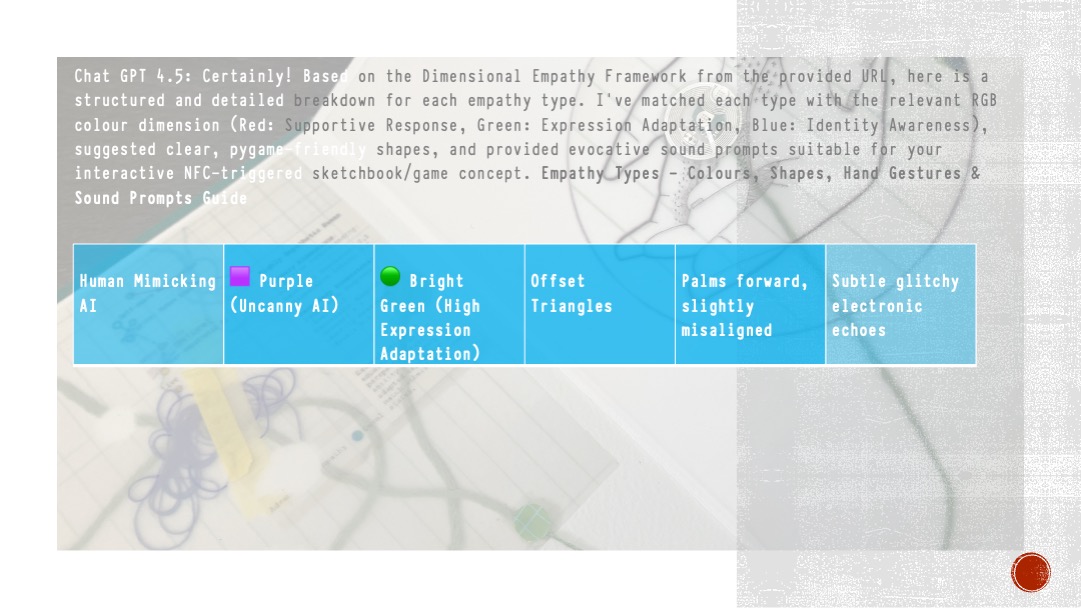
9. Human-Mimicking AI
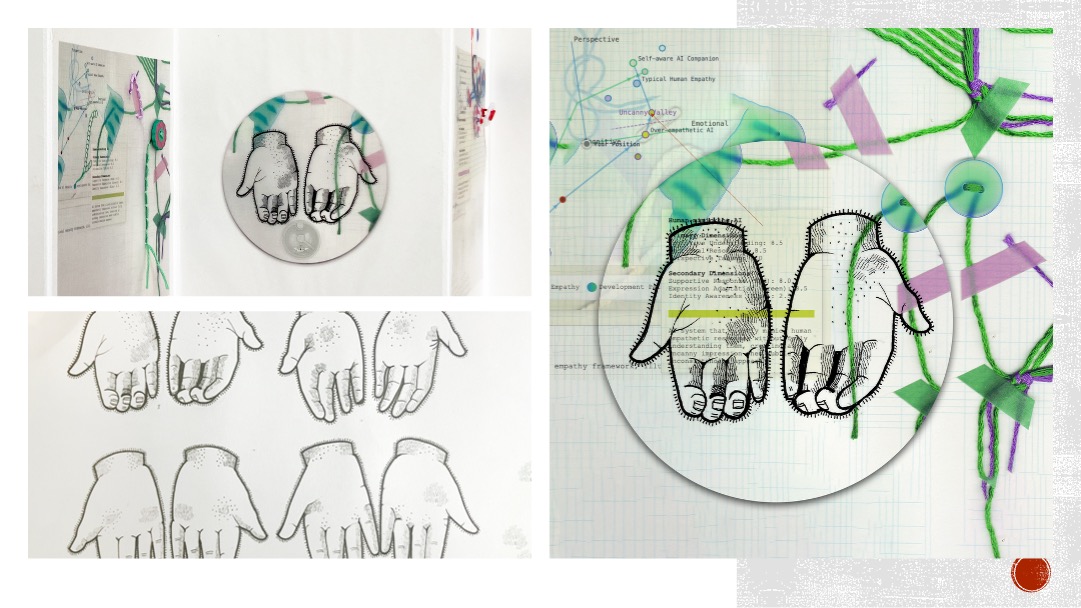
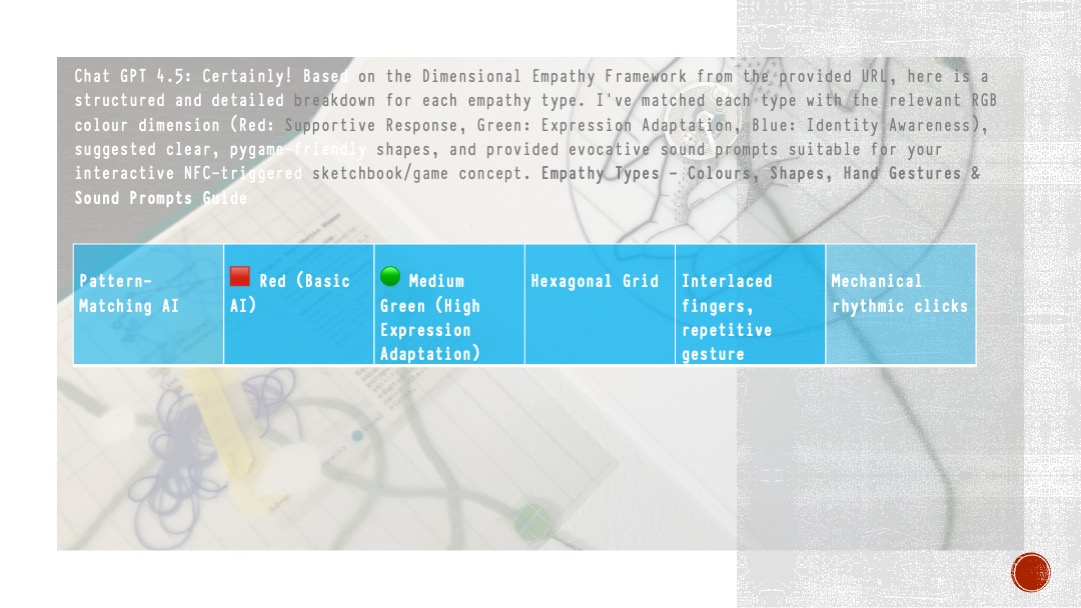
10. Pattern-Matching AI
CLAUDE'S ANALYSIS: HOW THE UNCANNY VALLEY SCORE WORKS
The uncanny valley score in our quiz measures how comfortable or uncomfortable you might feel when interacting with AI. Here's how it works in simple terms:
WHAT WE'RE MEASURING
We look at the difference between AI and human responses across several dimensions:
- How they analyze information
- How they handle time-related concepts
- How they understand context
- How they use intuition
THE CALCULATION
We use a special curve (a bell curve) that:
- Gives a low score when AI and humans are very different (clearly artificial)
- Gives a high score when AI and humans are moderately different (uncanny territory)
- Returns to a low score when AI and humans are very similar (comfortably human-like)
WHY THIS MAKES SENSE
This approach is based on solid research:
- It builds on Masahiro Mori's original uncanny valley theory
- It expands beyond just appearance to include how AI thinks and behaves
- It matches what psychology tells us about cognitive dissonance - when things are "almost right but not quite," it bothers us more than things that are either clearly artificial or convincingly human